



Telephone
+86.17749509387
+86.(025)5223 8890

WordTech
2025-09-04 16:14:35
0
Artificial intelligence is transforming the ways we think about language access, which is a good thing.
The ability to immediately support more people with limited English proficiency is really likely to optimize service, expand access, and save waiting time. For instance, AI can give us real value in such simple, routine conversations as appointment reminders, check-ins, or account updates.
Even so, continuing to explore all the functions of AI, we should also stay grounded in what it cannot, which is equally important. Communication is not only a technical exchange of words but also context, emotion, culture and intent showing human interpreters’ significance in the field of interpreting.
We have a good understanding of the great pressure the organizations are faced with. There’s increasing demand for efficiency in spite of the tight budgets. But the idea that AI can replace human interpreters in all scenarios shows us a really serious mistake. Reality is far more nuanced, and it’s worth taking the time to get it right.
The most effective language access strategies don’t treat technology and people as either-or. Instead, they find smart ways of utilizing both. The aim is to match the right resource to the situation at hand, balancing risks, complexity, and cost.
AI interpreting can be a strong fit for low-risk, low-complexity conversations, which are the occasions when interactions are structured, language can be predicted, and emotional stakes are minimal. Having automation of these calls can free up human interpreters from monotonous things for the more demanding work they are uniquely equipped to deal with.
Where AI falls short is in the unpredictable, the nuanced, and the emotionally charged, including medical diagnoses, care planning, legal discussions and crisis response.
Under these circumstances, communication is not only about the literal meaning of words but also about tone, intent and reading between the lines when a patient has hesitation or when a parent has a careful selection of their words in front of a child.
Bringing empathy and real-time judgement, human interpreters recognize when a phrase is culturally loaded. Knowing when to pause for clarification, they adjust on the basis of what is being said, as well as the ways it is being said.
This can explain the reasons why many forward-thinking organizations are moving towards a hybrid model. In this approach, AI deals with the initial interaction, providing speed and access. But if the conversation shifts and uncertainty, emotion, or complexity turn up, the system provides a seamless path to escalate to a trained professional. This model can guarantee safety without compromising service.
Giving healthcare and public service organizations more flexibility, the hybrid approach enables them to meet rising demand while protecting quality. It supports compliance, reduces liability, and makes sure that the most vulnerable conversations are handled with the care they deserve.
AI is not the enemy of human interpreters. It is a tool that, when used correctly, supports them. It expands their reach. It reduces their workload on the margins so that they can be concentrated on where they are needed most. But that only works when AI is deployed responsibly, with human oversight and clear boundaries.
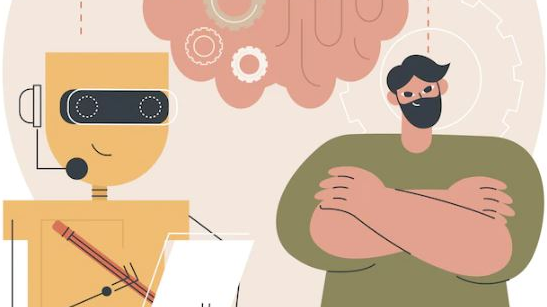
The future of language access isn’t AI versus human. It’s AI and human, working together. One offers speed and scale, and The other brings depth and understanding. We need both.
With you evaluating your organisation’s approach to language access, the question is not “Can we automate this?” but “Should we?” Start with the risk. Take consideration of the people involved. Then choose the tool safeguarding clarity, safety, and dignity in that moment.
That is how we move forward: not with shortcuts, but with strategy.