Telephone
+86.17749509387
+86.(025)5223 8890

WordTech
2024-05-06 10:54:37
0
The emergence of Sora has taken the development of the "text-to-video" large model a step further, and the discussion about the future substitution of human occupations by artificial intelligence has once again sparked heated debate. The capabilities presented by AI large models may have a huge impact on some industry forms, so will it really completely replace some human occupations? Faced with the development of artificial intelligence, what capabilities do we need to have?
Previously, in the "human occupations that AI is most likely to replace" understood by AI large models, "translation" was one of the top-ranked ones. In fact, after years of development in natural language processing and machine translation technology, the translation industry has once again ushered in a transformation driven by artificial intelligence technology. So, how do practitioners view this industry? In this "great change" technological innovation, how should human translators deal with the challenges brought by algorithms? Recently, a reporter had a conversation with Professor Zhang Shuyin from the School of Humanities and Social Sciences, The Chinese University of Hong Kong, Shenzhen, majoring in translation.
As early as the beginning of this century, when Google Translate was first born, many people had enthusiastically envisioned the "prospect" of machines replacing human translation. For the translation industry, there have always been two different voices: some believe it will be replaced by AI; others believe that AI will help its development.
As a professor of translation, Zhang Shuyin has a more neutral and optimistic attitude towards AI. "I don't think AI will replace the translation industry, but I think AI can help with some simple translation work and provide a larger platform and opportunities for top translation talents."
Her optimistic attitude towards the translation industry is based on the number of translation major institutions currently established in mainland China: Nowadays, the number of translation majors and the number of students enrolled in major universities in the mainland are constantly increasing, among which the number of professional institutions offering translation master's degrees increased to 316 in 2022; with the development of artificial intelligence technology, the curriculum settings of translation majors in major universities are also constantly updated, and many institutions have set up courses related to translation technology. "This reflects the optimistic attitude of the translation major towards this technology: AI only expands the scenarios of using translation by the public, but it will not replace this professional occupation of translation."
In fact, in terms of application scenarios, even in the current relatively mature era of real-time translation models, in some important business negotiations or diplomatic occasions, artificial intelligence translation equipment is not allowed to be used. On the one hand, it is due to the issue of trust in the machine equipment, and on the other hand, it is due to the accuracy of translation. "For example, for 'the two sides have different opinions', should it be translated as opposition, disagreement, or conflict? Different words may convey effects that are contrary to the intended communication purpose. In addition, for some subtle human emotions, machines are unable to detect and distinguish them."
But it cannot be denied that artificial intelligence translation technology is also affecting this ancient industry to change. "I myself am also training a translation assistant." Zhang Shuyin revealed that from the earliest Google Translate to the subsequent ChatGPT, the purpose of using translation tools is more to use machines to assist human work.
At the same time, Zhang Shuyin is also exploring the opportunities provided by AI for the translation industry. "About ten years ago, there was a saying in the industry, 'Literary translation is the last stronghold of manual translation.' At that time, everyone still thought that AI could not translate literature. But now we are actively exploring the use of machines to translate creative texts." Zhang Shuyin said.
The application of AI in literary translation has actually quietly occurred in the market of Chinese online literature "going global" first. According to Zhang Shuyin, the Chinese collection catalogue of the British Library now includes six works of Chinese online literature. In addition, there are countless fans of Chinese online literature abroad, who almost follow and update online literature every day. Compared with traditional manual translation, the biggest advantage of AI translation is low cost and high speed.
An employee from a certain translation software company disclosed to the reporter that the current public quotation for AI translation is about 6 to 10 US dollars per million characters, equivalent to 0.043 to 0.072 US dollars per thousand characters. While the regular quotation for manual translation is about 150 yuan per thousand characters, the cost gap between the two is huge; in addition, the high efficiency and real-time nature of AI translation also allows Chinese writers who update 5,000 to 8,000 Chinese characters per day to transmit the updated text to foreign readers in real time.
"Especially for novels of the Xianxia genre, urban romance novels, etc., because machine translation is based on learning big data samples and terminology, and weapons, sects, and levels in Xianxia novels can be realized in terms of terminology, so it is suitable to be completed with the assistance of human translators; and for urban romance novels, which are also based on the similarity of human emotional patterns, machine translation can also be used." Zhang Shuyin said.
But this does not mean that AI will completely replace manual translation in the short term. A translator said that usually for articles of political, economic and historical types, the effect of AI translation is not too bad, and only a little manual polishing is needed; while for literary content, such as ancient texts, poems, and even more delicate words, AI is not very good at it.
Zhang Shuyin also discovered the same problem. Previously, during her doctoral studies at University College London, one of her research papers was about the English translation of "A Dream of Red Mansions". "I found at that time that classic literature is difficult to 'go global' only with AI translation, but some soap operas and online literature are very popular overseas."
Wu Yiqin, vice chairperson, member of the Party Committee and secretary of the Secretariat of the China Writers Association, also mentioned recently that it is necessary to promote the industry-university-research cooperation of AI translation and accelerate the expansion of multi-lingual markets. Wu Yiqin stated that by establishing a multi-lingual corpus of online literature, the learning and adaptability of AI to multiple languages can be enhanced to ensure the language style, cultural connotation and local adaptation of the translated works, thereby improving the overall translation quality of the content, so that overseas users of different native languages can feel the charm of Chinese culture through reading.
"The attitude of translation enterprises and translators in China may be different." Zhang Shuyin revealed, "At present, translation software companies may be more inclined towards product thinking for translation, but as teachers, we believe that translation must have humanity, perception, creativity, empathy, and in the era of artificial intelligence, translators also need to have judgment, to be able to judge which translations generated by machines can be used and which cannot be used. This emphasizes the 'post-editing ability' of translators, that is, the ability to proofread and modify the text."
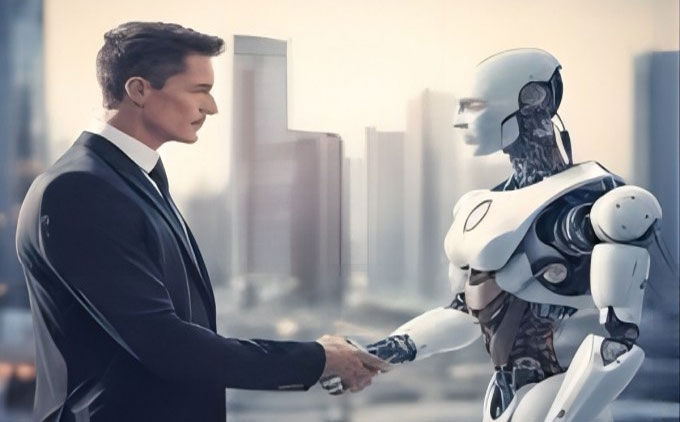
Zhang Shuyin believes that the future of the translation industry must be based on the joint collaboration of humans and machines. "Therefore, we are now also thinking about new ways for Chinese culture to 'go global', using AI technology to promote the 'going global' of online literature and the overseas dissemination of Chinese culture. Correspondingly, we hope to combine artificial intelligence technology and shift from previous studies on literary translation to machine-assisted literary translation."
From dayoo